Supporting Graduate Students' Academic and Professional Success
UCR Graduate Student Mentorship Network Fellows
Graduate Student Mentorship Programs
The Graduate Student Mentorship Network (GSMN) is precisely that —a network of mentorship programs and resources designed to enhance and enrich the graduate student community at UCR. GSMN Fellows are expert peer mentors who lead in developing mentorship in their departments.
2026 GSMN Fellows
-
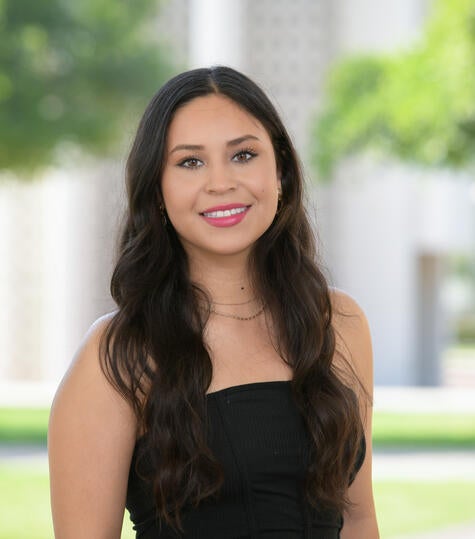
Audrey Braun
Audrey Braun is a 3rd year Ph.D. student in the Environmental Sciences department. Her research focuses on the fate of biosolids-borne contaminants in agricultural systems and their implications for human exposure. She was in the Graduate Student Mentorship Program as both a mentee and a mentor, and she is excited to continue to grow her mentorship skills in the Graduate Student Mentorship Network. Audrey attended Palomar College, where she earned an A.A. in Social and Behavioral Sciences and an A.S. in Mathematics and Science. For undergrad, she attended the University of Redlands and earned a B.S. in Chemistry. During this time, she was also involved in several student organizations, including Volunteers Around the World, Chemistry Club, Kappa Pi Zeta, and the softball team. Audrey enjoys traveling the world and has been to 21 countries. In her free time, she reads, goes to the beach, spends time with friends, and binge-watches shows and movies.
-
Beth Shallon
Bio: Forthcoming
-
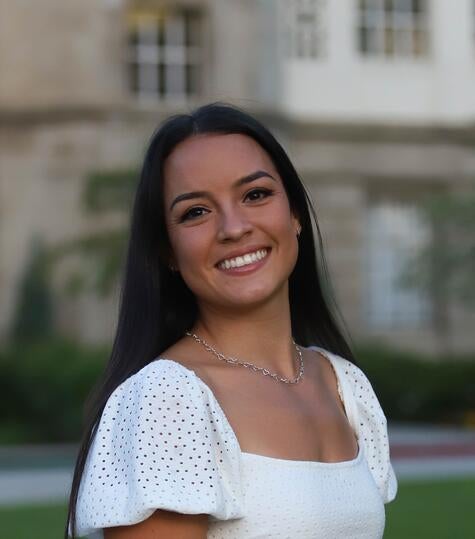
Brittney Nguyễn
Brittney Nguyễn is a lover. Brittney believes that love—when it is interpreted as the act of extending oneself to create a nurturing and dialogical environment—is the basis of anything and everything we deem meaningful. As human beings, why do we hold open doors if not out of love for our community? Why do we protest if not out of love for the oppressed? As graduate students, why do we research if not out of love for our natural and built world? Why do we mentor if not out of love for those who come after us?
As a third-year Ph.D. candidate in the Evolution, Ecology, and Organismal Biology (EEOB) department, Brittney seeks to use love as a revolutionizing force for science education and evolution research. She interrogates how classroom practices change when you consider the whole student and their interactions with their peers, as well as how evolutionary conclusions change when you consider the traits of the whole organism and their interactions with other traits. Shoutout to her undergraduate research team for making her dissertation dreams come true! And because she can’t get enough of mentoring, Brittney is also the Graduate Student Co-Chair of the SEEDS-CCB Mentorship Program. Within her department, she has worked to establish a pilot run of the EEOBuddies Mentorship Program for new students.
For any and all things love, please feel free to contact Brittney at bnguy270@ucr.edu! If you, too, are afraid of your inbox, you might instead find Brittney at the park walking her dogs, on stage doing improv, or at the library reading and writing with fervor.
-
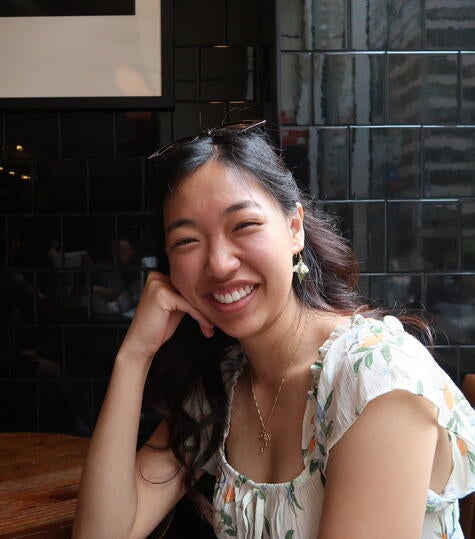
Charly Acevedo
Hi! I am Charly Acevedo, a BMSC PhD Candidate. I study IBD and all it has to do with PTPN2 and Paneth cells. I like trying new food and matcha places, and I love thrifting! Please feel free to reach out to me at any time with any questions! :) cacev029@ucr.edu
-
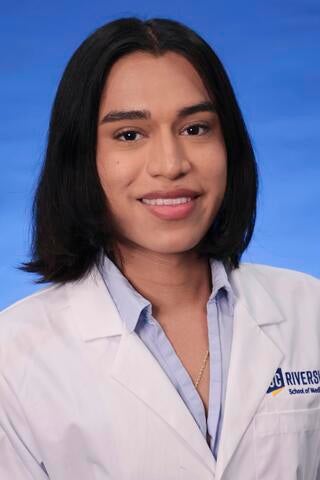
Destyni Cravens
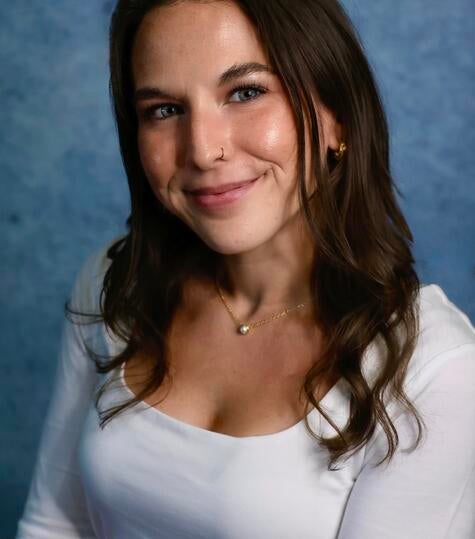
My name is Destyni and I am currently a fourth-year PhD candidate in UCR's Developmental Psychology PhD program, where I work with Dr. Misaki Natsuaki in the Developmental Transitions Laboratory. I am originally from a small town in Alabama and attended the University of Alabama at Birmingham (UAB) for undergrad as a first-generation college student. I obtained a BS in Psychology and a BA in Sociology with an undergraduate certificate in Mental Health. While there, I also took part in UAB's accelerated Bachelor's to Master's program, where I also obtained a Master of Public Health (MPH). During undergrad, I was also involved in several student-led mental health promotion organizations where I was able to advocate for better mental health resources for my peers, which sparked my passion for mentorship and community work. Following undergrad, I then moved cross-country to begin graduate school. My research interests focus on the role of early adverse experiences, such as parental mental health concerns and growing up in a low-income family, on child and adolescent development. More specifically, I am interested in the influence of parent-child role confusion, or when the parent-child role(s) become unclear within a family system, on child/adolescent development and various familial outcomes. In addition to research, I enjoy continuing to grow my mentorship skills by mentoring both undergraduates and graduate students across UCR’s campus and giving back to the campus community by serving as the Graduate Student Association’s Basic Needs Liaison. In addition, I have aided the Psychology Department in reinstating a first-year graduate student mentorship program, which is currently in its second year of implementation and outreach. I am excited to continue growing my mentorship skills and expertise by serving as a Graduate Student Mentorship Network Fellow this academic year. In my free time, I love to go on hot girl walks, explore coffee shops, and watch trashy reality TV. Please feel free to reach out to me via email if you have any questions about my previous and current experiences in academia!
-
Drew Trinidad
Drew Trinidad is a Ph.D student in the Department of English at the University of California, Riverside, and is also pursuing a designated emphasis in Southeast Asian Studies. They are additionally a Writing Across the Curriculum (WAC) instructor in the University Writing Program. Their research is on queer Asian Anglophone texts primarily from North America and Southeast Asia, alongside queer Chinese and Thai texts in translation.
Currently, Drew's dissertation project is interested in the navigation of queer Asian bodies throughout the urban cityscape and how they remap queer Asian desire through a languaging of liminality within the (post)colonial map of geographic sites, including Los Angeles, Bangkok, Manila, Sydney, and Vancouver.
Drew has published book reviews in GLQ: A Journal of Gay and Lesbian Studies, Sexualities, and QED: A Journal of GLBTQ Worldmaking.
-
Donald Zarate
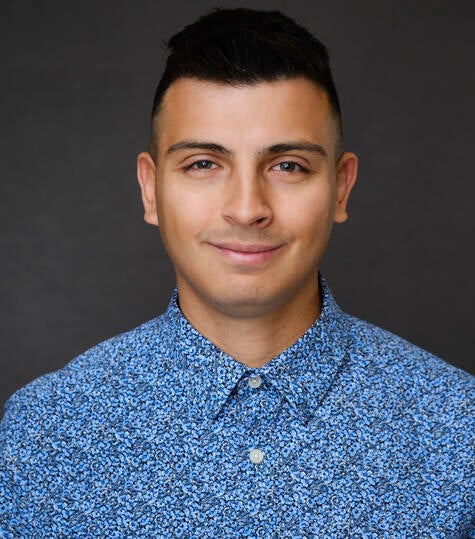
Donald Zárate is a third-year Ph.D. student in Political Science at the University of California, Riverside (UCR), specializing in Political Theory. His research centers on utopianism and intentional communities, examining how normative views about society influence political behavior. Donald holds dual bachelor’s degrees in Political Science (BA) and Psychology (BS) from UCR and three associate degrees in Science & Math (AS), Social & Behavioral Studies (AA), and Humanities, Philosophies & Arts (AA) from Norco College. He is currently appointed as a Graduate Student Researcher (GSR) in the Department of Political Science.
Donald's most recent work, “From Exclusion to Utopia: A Comparative Study of Intentional Community Formation,” was published open access in Political Research Quarterly, a top political science journal. He has also been a semi-finalist in the 2024 UCR GradSlam competition and was featured in a spotlight video and article as part of UCR’s Bold Hearts, Brilliant Minds campaign. He is also working on “Bridging Positivist and Interpretive Methodologies Through Contextualized Comparison,” which was presented at the 2026 Southwest Workshop on Mixed Methods Research. His academic achievements have earned him the Lindon Barrett Award in Black Studies, the Dean’s Distinguished Fellowship ($29,000), the Humane Studies Fellowship ($5,000), and the College Corps Education Award ($3,000), among others.
In addition to his academic pursuits, Donald serves as the Chapter Mentor of UCR’s Pi Sigma Alpha chapter, has volunteered with the LIFTED program to support higher education for incarcerated people, and has more than 10 years of service in the U.S. Army, currently serving as a Staff Sergeant (SSG). Donald aims to complete his Ph.D. and commission through UCR’s ROTC, with a long-term goal of teaching at the U.S. Military Academy (West Point).
-
Julia Torres
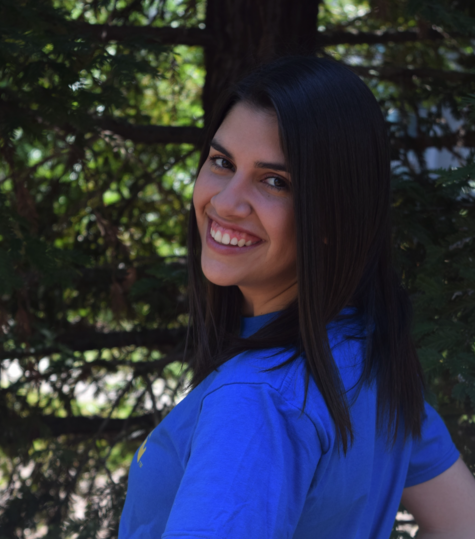
My name is Julia Torres, and I am a 7th-year PhD Candidate in the History department here at UCR. I am finishing up my dissertation and hope to graduate in June. My dissertation centers California’s Central Valley in a discussion of race-based exclusionary laws between the years of 1850 and 1950. I argue that these race-based laws, such as those revolving around immigration and segregation, would not have been as successful or exclusionary without the inclusion of strict anti-miscegenation laws. By restricting the creation of families, containing and protecting white supremacy was clearly at the forefront of lawmakers’ minds. I am also the current 2nd Vice President for the Southwest Oral History Association. I was a peer mentor for the Graduate Student Mentorship Program while it was available, and I am excited to work to help new graduate students adapt to graduate school and to help departments grow and understand how to best support graduate students.
-
Marina Youngblood
Bio: Forthcoming
-
Viviana Padilla
Viviana is a doctoral candidate in the School Psychology program at the University of California, Riverside, driven by a strong passion for supporting underserved and underrepresented communities. She earned her Bachelor of Science in Psychology with a Biological emphasis from the University of California, Davis. Her research interests include using implementation science to study and promote the implementation of culturally responsive Social Emotional Learning (SEL) programs in school settings and supporting students’ mental health using a preventive lens. Viviana has demonstrated her commitment to diversity and community support through her roles as the Diversity Subcommittee Chair for the Student Affiliates of School Psychology (SASP), and as a peer mentor in UCR’s Graduate Student Mentorship Program. In her free time, Viviana enjoys reading, salsa dancing, cooking, and spending time with her friends and family.